Product vs Market
Product market fit is very obvious when you have it.


Photo by Jukan Tateisi on Unsplash
I have worked with a lot of early-stage start-ups and scale-ups. There are numerous things they get wrong, and most people get the same things wrong.
But what I have noticed through my recent experiences is that, despite the fact that many large orgs have a good customer base and may be comfortably profitable, they don’t understand the fundamental equations that have achieved that.
Early-stage businesses talk of product-market fit. But it’s too obvious when you have it. They struggle because they don’t yet understand the demands of defining a customer, which is always a narrow construct to begin with, and how that relates to a likely volume of sales and, therefore, returns based on solid data.
Mature businesses also struggle here. There are some simple truths you need to understand;
You need around a 20% market penetration in any one sector or your business will die. 20% of any market or segment is significant. But for mature businesses, the challenge here can be further growth. What do you do when you have already grabbed 20%?
Well in either case, you need to identify other customer profiles which may benefit from the solution. What aspects of the product will you need to adapt, or add in order to serve that customer? What about new markets? How many of those customers are in that market? What factors might impact that segmentation? Where can you get or find a reliable source of data to model this?
The equation is simple:
Specific customer profile within X addressable market = enough market share?
If it doesn’t, then you need to consider your customer profiles and segments.
Pitfalls
Too many cooks.
In a business model that relies on investment rounds, you need to have a handle on forecasting. The earlier the stage the more critical this is.
A lot of Execs will say Oh, we need to coordinate across multiple departments. No, no, you don’t. For late-stage businesses that have reached corporate levels of people, systems, processes, etc., you will have armies involved in generalised management consulting. In Startups and Scale-ups, this has to be owned and led by the Execs.
As an Exec, you should have a model for this. The teams may work with the finer details, but you should work this out. In a business model that relies on investment rounds, it is absolutely essential that you have a good handle on this.
In an investor-backed model, you should have a financial model which outlines the financing rounds and the shareholding dilutions, and what it will take to get you to exit. This is an Excel spreadsheet exercise and a bit of modelling effort to execute.
If you don’t know what you will do with the product, how many sales do you need to generate then how much money will you need to get to the next financing round? How do you know what product you are building? How do you know how the solution will serve that? How do you know what skills and resources you will need to build it? Due diligence will pick this up, or should. Don’t wait for the DD before you consider it.
Haven’t really considered the data
A typical pitfall is also not to really scrutinise data from a reputable source. This is essential. The majority of business leaders find out only too late that their market isn’t as big as they thought. Good leadership tackles this head-on and tries to answer the problem.
A couple of example’s of this in action is below:
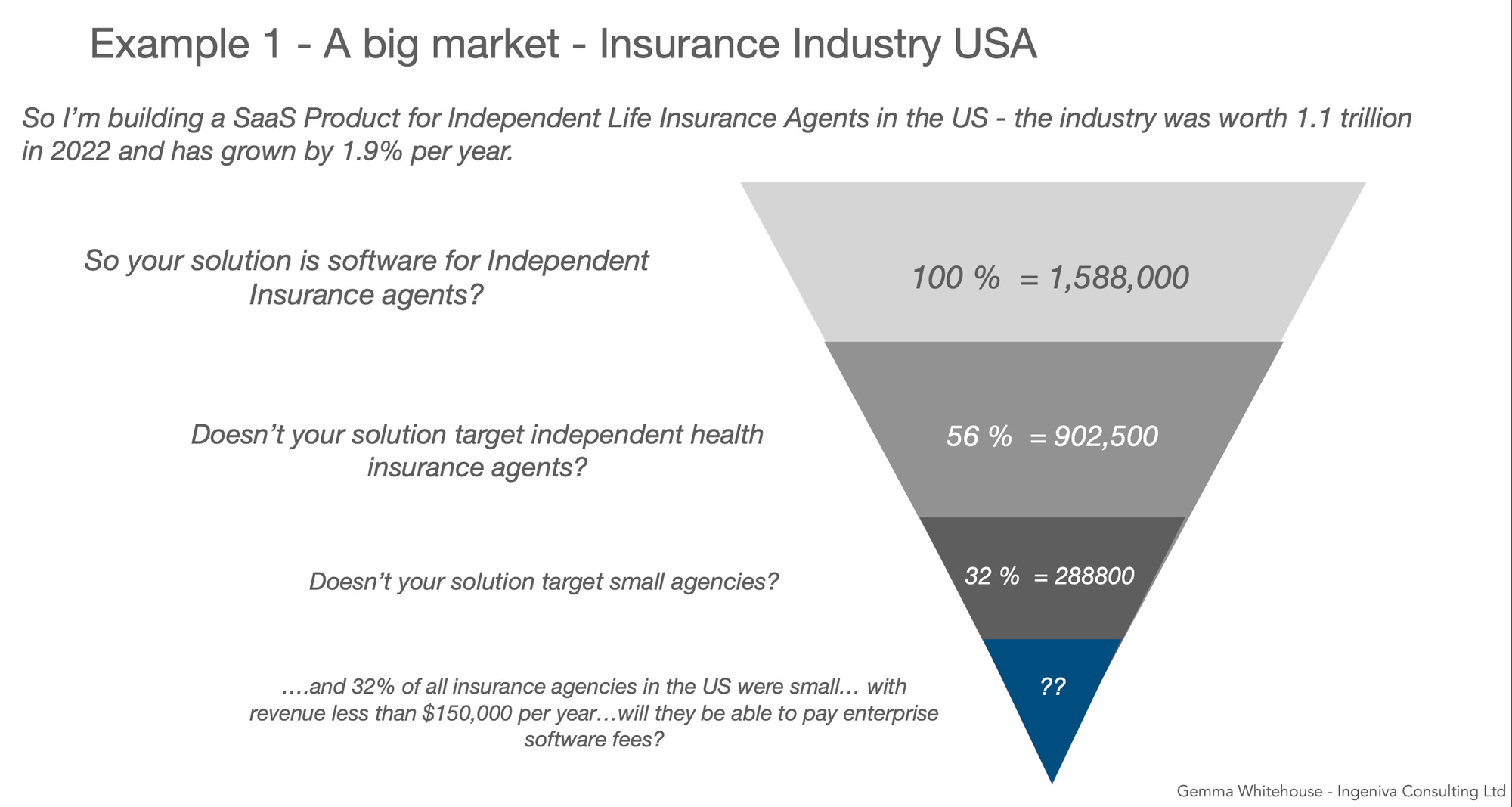
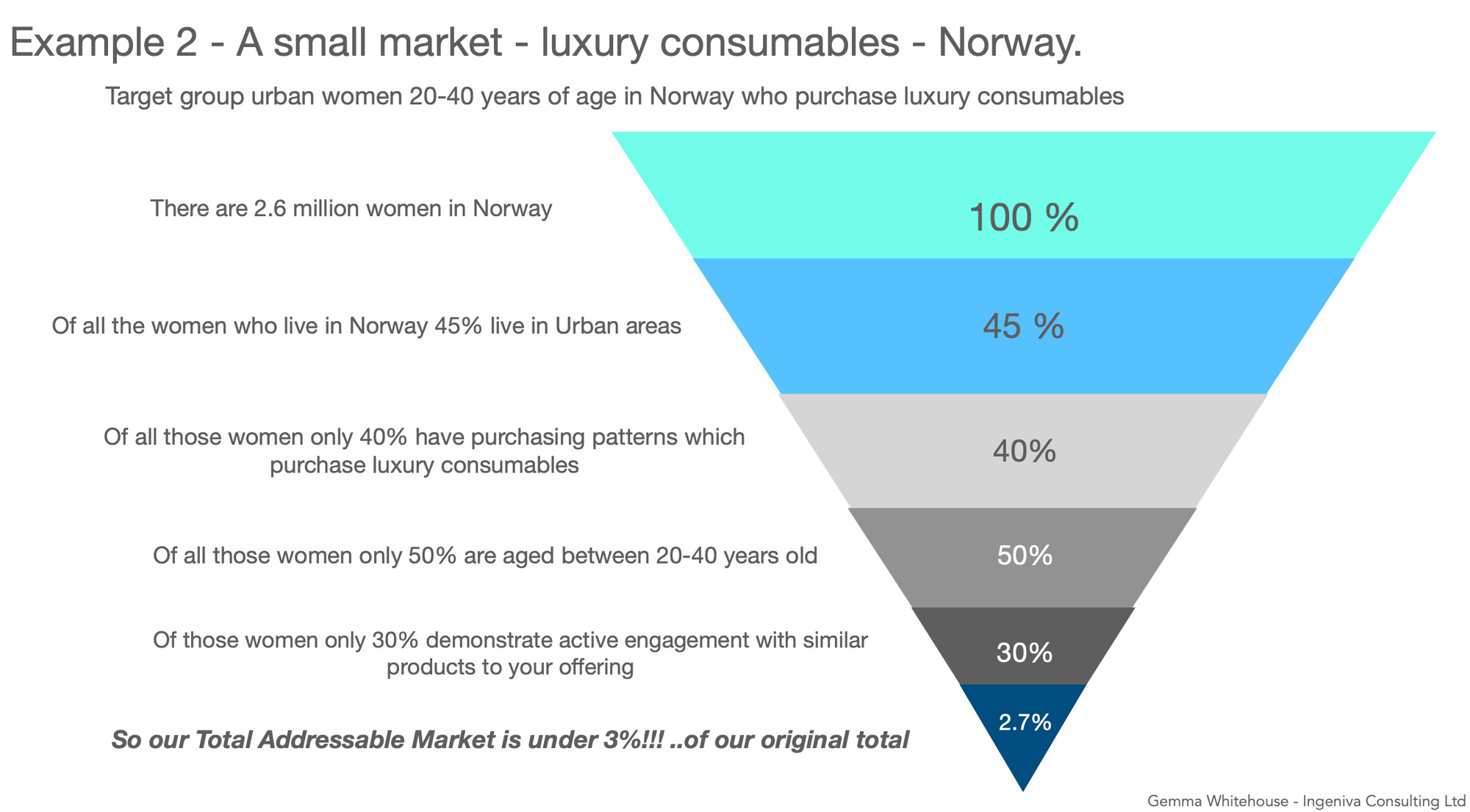
Not understanding how small your market actually is and how few customers you actually have to sell to is one of many reasons for business failure.
Product development is not just about solving the user’s problem. Its about finding business value that will not only monetise but will offer sustainable, scalable returns.
Product as a discipline is often poorly defined. You cannot be a product leader and not have some sense of these basic commercial functions. Yet they are so often missing from the conversation.
I often feel in business and more specifically product-led software business that no one articulates the basics to you, and you’re often expected to work this out via osmosis. It’s a specific discipline, and one that, if you haven’t got the experience of building within this particular context, it takes time and practice to get good at it.
Clarity on the fundamentals and owning that is what will give you the best chance of success.